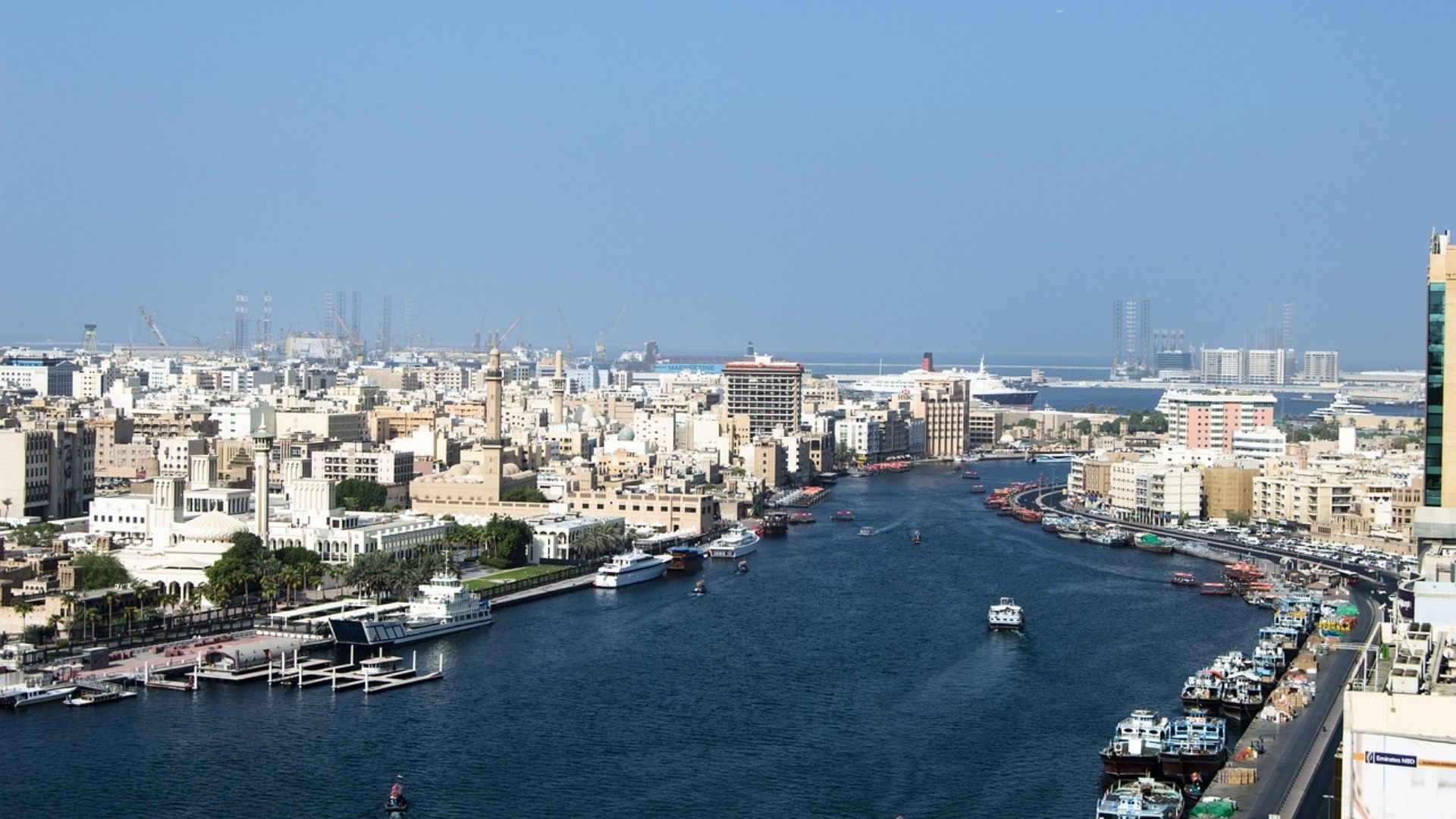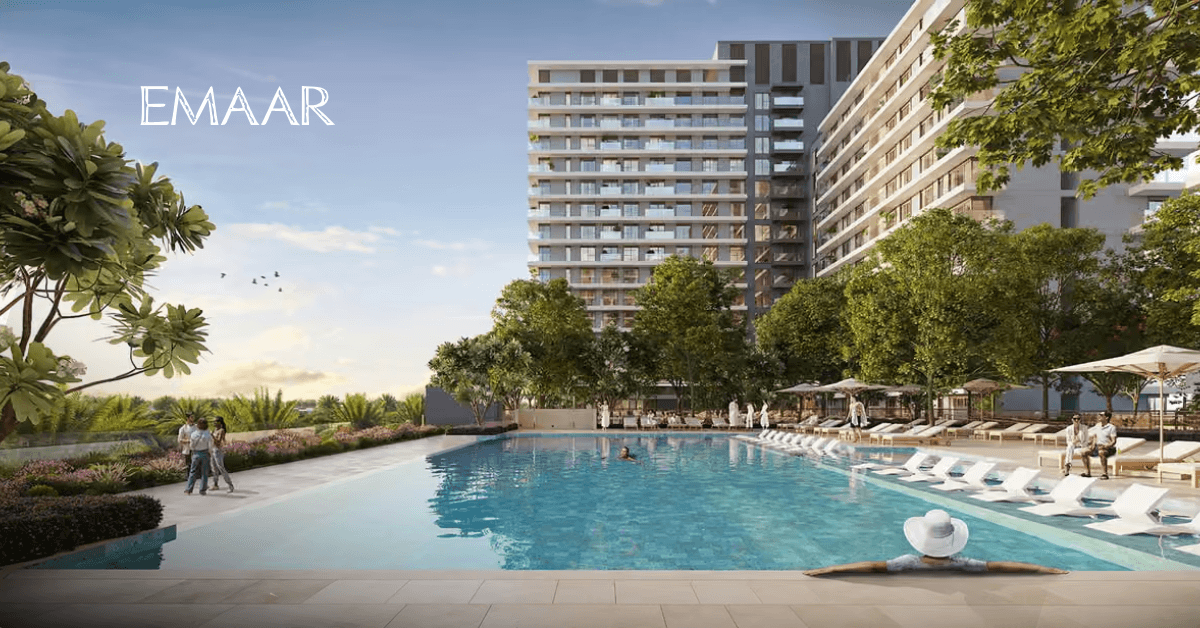


If one name comes up in almost every conversation about Dubai real estate, it is Emaar. This guide is meant to answer a practical question for the Israeli investor: does buying an Emaar property really reduce risk compared with buying from a smaller or newer developer, and if so, by how much?
Mohamed Alabbar founded Emaar Properties in 1997. The company is listed on the Dubai Financial Market and remains the largest real estate developer in the UAE by market capitalization. In the first seven months of 2026 alone, Emaar recorded sales of about AED 31 billion across 5,636 transactions. This is the highest sales volume in the market, nearly 1.8 times that of its closest competitor.
What Emaar Has Already Built
Emaar's portfolio is not made up of individual buildings alone. It includes entire neighborhoods planned as a whole, and today they are a central part of how Dubai looks and functions. These are the main projects:
Downtown Dubai: a district of about 500 acres around Burj Khalifa and Dubai Mall. In the early 2000s it was desert land; today about 100,000 residents live there.
Dubai Marina: a long-established waterfront neighborhood, jointly developed, with one of the most liquid and established secondary markets in the city.
Dubai Hills Estate: currently Dubai's leading neighborhood in the luxury segment by transaction value.
Dubai Creek Harbour: Emaar's newer waterfront masterplan, generally considered its highest-yielding neighborhood for apartments today.
The Oasis: a villa and estate project covering a total of 100 million square feet in Dubailand, with a reported total development value exceeding AED 73 billion.
Since 1997, Emaar has handed over more than 88,000 residential units across these and other projects, and tens of thousands of others are in active development.
Emaar's Delivery Track Record
For off-plan buyers, the ability to meet delivery deadlines is probably the most important yardstick for assessing a developer. A late handover ties up capital for longer than planned and can disrupt the financing plan. According to independent sources that track market data:
| Metric | Emaar | Dubai Market Average |
|---|---|---|
| On-time delivery rate | About 95% to 100% within six months of the contractual date | About 55% to 60% |
| Length of delay when it occurs | Typically a few months | Often several months |
| Contract cancellation rate | Close to zero | Significantly higher |
Meeting deadlines is the core of Emaar's value proposition. Some real estate analysts claim that the company's apartments rent and resell at a notable premium compared with similar apartments from less established developers. To a large extent, buyers and tenants here are paying for certainty, not just for the property itself.
Prices and Yields in Emaar Neighborhoods
| Neighborhood | Property Type | Entry Price | Typical Yield |
|---|---|---|---|
| Downtown Dubai | Apartments | From AED 1.2 million | 5%–6% |
| Dubai Marina | Apartments | From AED 2 million | 6%–6.5% |
| Dubai Hills Estate | Villas and apartments | From AED 1.8 million | 5%–7% |
| Dubai Creek Harbour | Apartments | From AED 1.1 million | 5.5%–7.2% |
| Arabian Ranches | Villas | From AED 2.5 million | 4%–5% |
The data shows that Emaar hardly competes for the highest yield. Neighborhoods by other developers, including JVC and Business Bay, sometimes show higher yield percentages. Emaar's advantage lies elsewhere: lower volatility and better liquidity in the secondary market. For an Israeli investor evaluating an unfamiliar market from a distance, there is added value in a familiar name and in a delivery history that can be checked before transferring the down payment.
Who Emaar Is Especially Suited For
Emaar may be especially suited to the following groups of investors:
Those buying their first property in Dubai and preferring a long, verifiable delivery history over chasing the highest yield.
Investors focused on preserving capital value and looking for a liquid secondary market. According to DLD records, Emaar properties are consistently among the most traded in Dubai.
Buyers seeking a brand-associated finish level and uniform neighborhood management. Emaar typically continues to manage its neighborhoods after handover, rather than passing responsibility to an outside party.
Emaar is less suited to the following groups:
Investors seeking to maximize yield alone. If the main goal is the highest rental yield relative to the capital invested, areas such as JVC or Business Bay, which are aimed at the mid-market and yield-focused segment, will usually deliver more than a comparable Emaar property.
Investors with a very low entry budget. Even in Emaar's more accessible neighborhoods, entry prices tend to start above AED 1.1 million. The market has far cheaper studio apartments in other developers' projects.
Emaar Properties Scorecard
Location: 9 out of 10. Emaar's neighborhoods are spread across some of the most sought-after established and developing areas in Dubai, from Downtown to Creek Harbour.
Developer: 10 out of 10. The company has the largest market capitalization in the industry, a contract cancellation rate close to zero, and the best independent data on meeting deadlines among Dubai's major developers.
Project concept: 9 out of 10. Emaar plans entire neighborhoods that include retail, hospitality, schools and transport, not just separate towers. This approach supports the neighborhood's value over time.
Price: 5 out of 10. Prices are significantly above the Dubai average and do not offer a convenient entry point for a beginner investor with a limited budget.
Rental potential: 6 out of 10. The yield is stable but not exceptional. In most Emaar neighborhoods it is below the city average, in exchange for more moderate volatility.
Appreciation potential: 7 out of 10. Newer neighborhoods, such as Creek Harbour and The Oasis, show a strong upward trend. In established areas like Downtown and Marina, appreciation is more moderate and consistent.
Liquidity: 9 out of 10. Emaar properties trade consistently and in high volumes in DLD records, so resale and refinancing tend to be relatively straightforward.
Bottom line: Emaar suits investors who prefer relative capital security, secondary-market liquidity and a verifiable history, even at the cost of giving up maximum rental yield. It is a relatively conservative investment that includes a brand premium, not an aggressive strategy aimed at high cash flow.
Buying an Emaar Property from Israel
Emaar's scale simplifies some of the difficulties Israeli investors encounter in the Dubai market. Still, there are several points worth preparing for in advance:
Sales channels are more organized, but also less flexible. Emaar sells mainly through its own sales centers and a network of licensed brokers, rather than through dozens of independent agencies. As a result, prices and payment plans are relatively uniform. There is usually less room for negotiation than with a small developer, but also less risk of receiving conflicting information from different agencies.
Payment plans may run longer than those of smaller developers. Emaar sometimes offers payments that continue after the handover of an off-plan property. In some projects this is a 60/40 split or a similar structure that ends years after handover. This can significantly change cash flow compared with a developer who requires full payment close to handover. Before comparing prices, it is worth calculating the cost under both structures.
Verify which legal entity signs the contract. The name "Emaar" covers several public and private companies, including Emaar Properties, Emaar Development and various joint ventures. The sale agreement will name a specific contracting entity. It is important to make sure it matches the entity that the agency and the due diligence refer to.
With these amounts, planning the currency conversion and the international transfer matters especially. Emaar's entry prices are higher than those of most other developers, so the dirham amounts are larger. The timing of the conversion, the shekel-dirham exchange rate, and transfer fees all affect the total cost accordingly. It is advisable to decide in advance how and when the money will be transferred.
Management and maintenance fees are a real ongoing expense. In the integrated neighborhoods that Emaar manages itself, service charges are generally higher than in smaller projects. In return you get landscaping, security and consistent maintenance of facilities. Include this expense in the net yield calculation rather than relying on the gross yield shown in developer publications.
Working with a licensed agency experienced in accompanying Israeli investors removes much of the difficulty in the practical stages of the transaction. The difference between an orderly purchase and a stressful experience usually comes from the preparation before signing, not from any special feature of the apartment. It is worth verifying any agency claim about delivery rates or yields against the public DLD transaction database. It is a short check that there is no reason to skip. The data in this guide, or in any other guide, should not be treated as truth that needs no verification.
Frequently Asked Questions
Is Emaar considered a safe developer for Israelis buying off-plan?
According to independent reports, Emaar delivers about 95% to 100% of properties within six months of the contractual date. Combined with a cancellation rate close to zero, this makes it one of the relatively lower-risk options in Dubai's off-plan market. Still, no purchase is risk-free. You should check the project's RERA registration and the status of the escrow account, regardless of who the developer is.
What is the entry price for an Emaar property in Dubai?
The price varies from neighborhood to neighborhood. For apartments in newer neighborhoods, such as Dubai Creek Harbour, it starts at about AED 1.1 million. In long-established areas, such as Dubai Marina, the price may exceed AED 2 million.
Do Emaar properties deliver a good rental yield compared with other Dubai developers?
Usually it is not the highest yield. In Emaar neighborhoods the yield typically ranges from 5% to 7%, compared with 7% to 9% in yield-oriented mid-market areas such as JVC. Emaar's main advantage is liquidity and capital preservation, not maximizing yield.
What are Emaar's most important active projects?
As of 2026, Dubai Creek Harbour and The Oasis are two of Emaar's largest active development pipelines. Creek Harbour is currently considered the company's neighborhood with the highest rental yield, while The Oasis is a large-scale villa program covering 100 million square feet in Dubailand.
How does Emaar compare with DAMAC or Azizi for a beginning investor?
Emaar generally offers a better delivery history and higher liquidity in the secondary market. Azizi and DAMAC sometimes offer lower entry prices and, in some market segments, higher yields. The choice depends on whether the priority is relative security and liquidity, or yield and an accessible price.
This guide is based on public information from 2026 and on DLD-related market data collected from regional real estate research sources. It is intended for general information only. Dubai Index works with licensed and verified agencies to help Israeli investors evaluate specific Emaar opportunities according to their goals. You can contact us for a customized comparison.