

Supply Is Only Half the Question
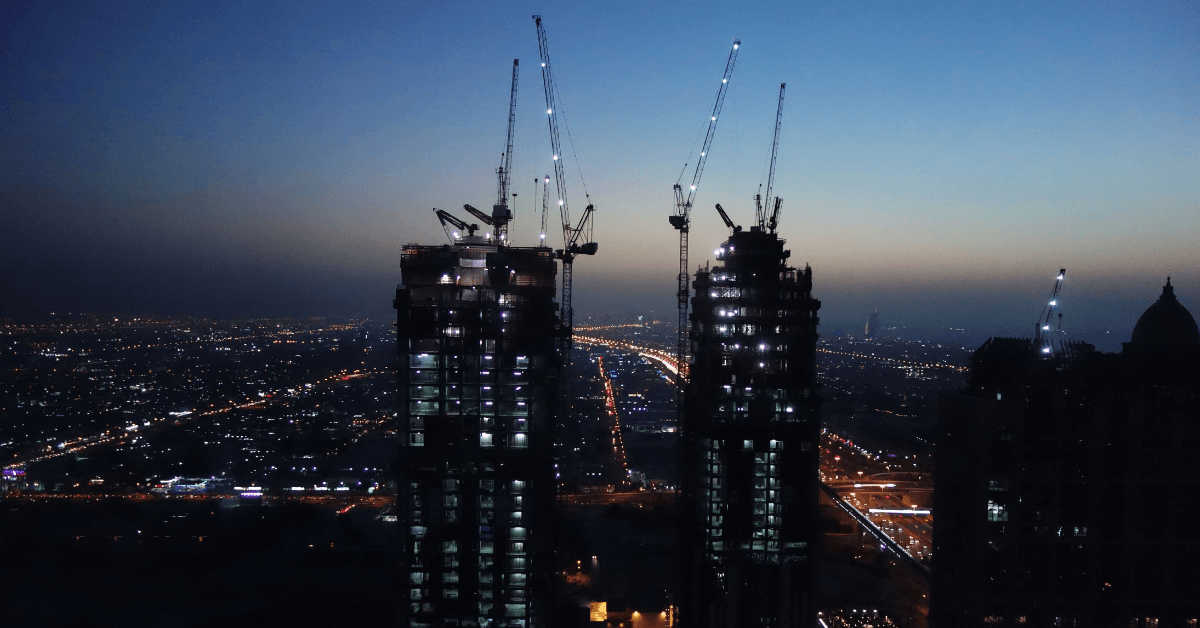
JVC oversupply is one of the most common concerns among investors looking at Jumeirah Village Circle. The concern is real: Dubai is in its busiest handover year in almost two decades, and the area is one of the hotspots for new construction.
But counting apartments answers only half the question. The other half is how many people can afford to live in them. In 2026, that number is also growing fast.
In this guide we look at both sides, compare affordable areas with premium ones and set out practical checks that separate an apartment that rents quickly from one that sits empty.
What Is Oversupply?
Oversupply happens when more properties are completed in an area than there are buyers or tenants ready to absorb them. Landlords compete harder, vacant periods get longer and rents come under pressure.
Two important terms:
- Absorption rate: how quickly new apartments find buyers or tenants after handover.
- Gross rental yield: annual rent divided by the purchase price, before service charges and other costs.
Volume alone does not decide the outcome. It has to be weighed against actual demand.
How Much New Supply Is Coming?
Cushman & Wakefield Core forecasts about 55,600 handovers in Dubai in 2026, the highest number since 2008, and more than 60,000 in 2027 (Khaleej Times).
Supply is not spread evenly. In its Q1 2026 report, the firm named five handover hotspots:
- Jumeirah Village Circle and Triangle.
- Dubai South.
- Mohammed Bin Rashid City.
- Business Bay.
- Dubailand.
According to the report, this concentration is more likely to create local pressure than citywide oversupply (Cushman & Wakefield Core).
Further out, there is also a sign of relief: apartment launches fell by about 58% in H1 2026 compared with a year earlier. As a result, new supply is expected to be spread more evenly after 2027.
Over the next two years, many new buildings in the area will compete for tenants. For general information see our area guide, and for handover and price data see our case study.
Who Can Afford to Live in the Area?
Oversupply becomes a problem when it grows faster than the number of people who want to rent. Dubai's numbers are strong on this side too.
According to the Dubai Data and Statistics Establishment, the population reached about 4.81 million at the end of September 2026 (Gulf News).
- About 227,000 residents were added since the start of the year.
- About 332,000 residents were added in 2025.
- People aged 30 to 34 are the largest age group, about 15.5% of the population.
- 62,800 households were added in 2025, an increase of 7.9%.
Many newcomers are salaried professionals in finance, technology, healthcare, aviation, hospitality and education. Even those who earn well do not necessarily want to spend a large share of their income on rent.
They want a good apartment, a reasonable commute, shops, gyms and parks nearby, and above all money left over at the end of the month. That is exactly the tenant base this area serves.
What Do 2026 Rents Show?
Bayut's H1 2026 report ranks Jumeirah Village Circle as the top choice for mid-market apartment tenants. The gap in asking rents compared with central and waterfront areas is large (Bayut).
| Area | Average annual asking rent, one-bedroom | Two-bedroom |
|---|---|---|
| Jumeirah Village Circle | AED 79,000 | AED 113,000 |
| Business Bay | AED 104,000 | AED 148,000 |
| Dubai Marina | AED 103,000 | AED 157,000 |
| Downtown Dubai | AED 133,000 | AED 223,000 |
Source: Bayut H1 2026 rental market report. These are listing prices, not registered contract amounts.
Resilience in Q2 2026
Cushman & Wakefield Core reported a 4% quarterly fall in sale prices across the city and a 6% fall in rents. The firm noted that tenants are moving to properties that offer better value for money (Khaleej Times).
In the same quarter:
- Apartment prices in Jumeirah Village Circle fell 3%.
- Downtown and Business Bay fell 7%, and Palm Jumeirah 9%.
- The sharpest apartment rent falls were in Downtown, 14%, Dubai Hills and the Marina, 10% each, and Palm Jumeirah, 9%.
The area is not immune, but the data shows that when price becomes a bigger factor, established and affordable communities tend to hold up better.
JVC vs Dubai Hills: Different Target Tenants
Dubai Hills Estate is an excellent master-planned community, but it appeals to a different customer.
A tenant looking for a one- or two-bedroom apartment may be able to afford either area. One will choose Jumeirah Village Circle for more space and amenities for the money. Another will pay more in Dubai Hills for the parks and golf course. Both choices make sense.
For an investor, a high price does not guarantee a better investment, and a low price does not guarantee a higher yield. The questions are who your tenant is and how many such tenants exist. A price that a large share of the city's workforce can pay creates a broad tenant base, and later a broad buyer base too.
Does JVC Oversupply Justify Avoiding the Area?
No, but it does justify more careful selection. Oversupply increases competition between buildings; it does not necessarily mean a shortage of tenants. This is an established, affordable community with rental demand. Well-designed, well-managed apartments are likely to keep finding tenants, while average ones will struggle more.
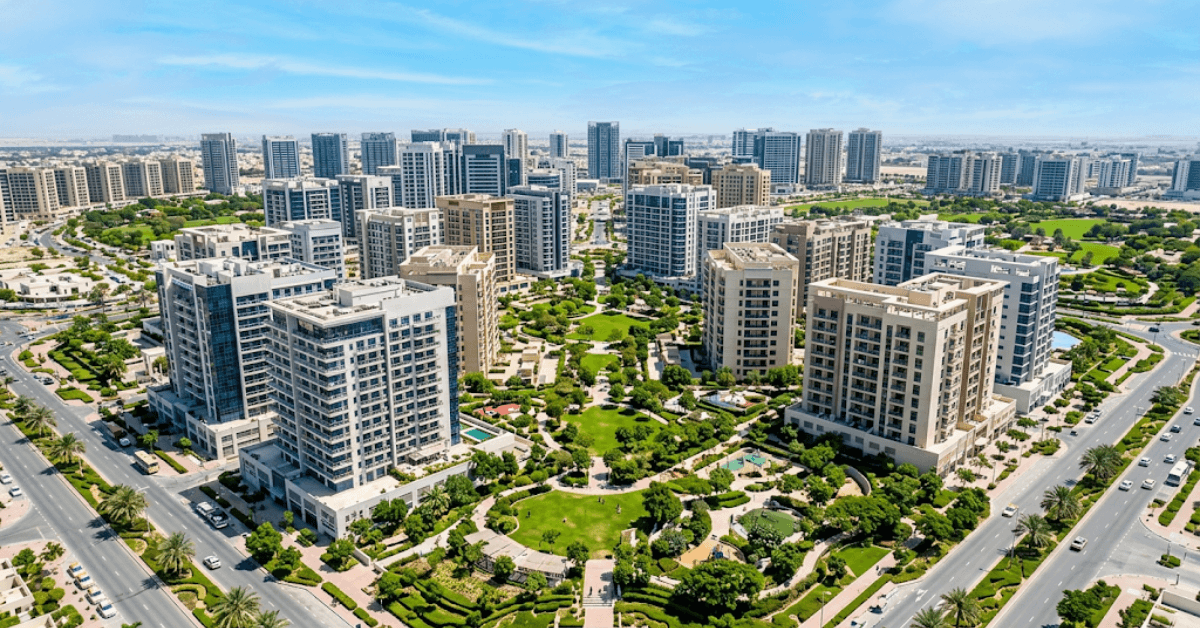
The area has schools, supermarkets, parks, gyms and Circle Mall, plus easy access to Al Khail Road and Sheikh Mohammed Bin Zayed Road.
The risk is competition. When a tenant can choose between ten similar apartments, the weaker ones are rejected first. Imagine two apartments at the same rent:
- Apartment A: awkward layout, small windows, average finishes and hundreds of identical units in the tower.
- Apartment B: practical layout, natural light, better finishes, well-maintained amenities and less direct competition.
Apartment B will rent first and can keep its tenant longer. In a market with little supply, Apartment A might also do well, but that protection disappears in a crowded market like 2026 and 2027.
Nine Checks Before You Buy
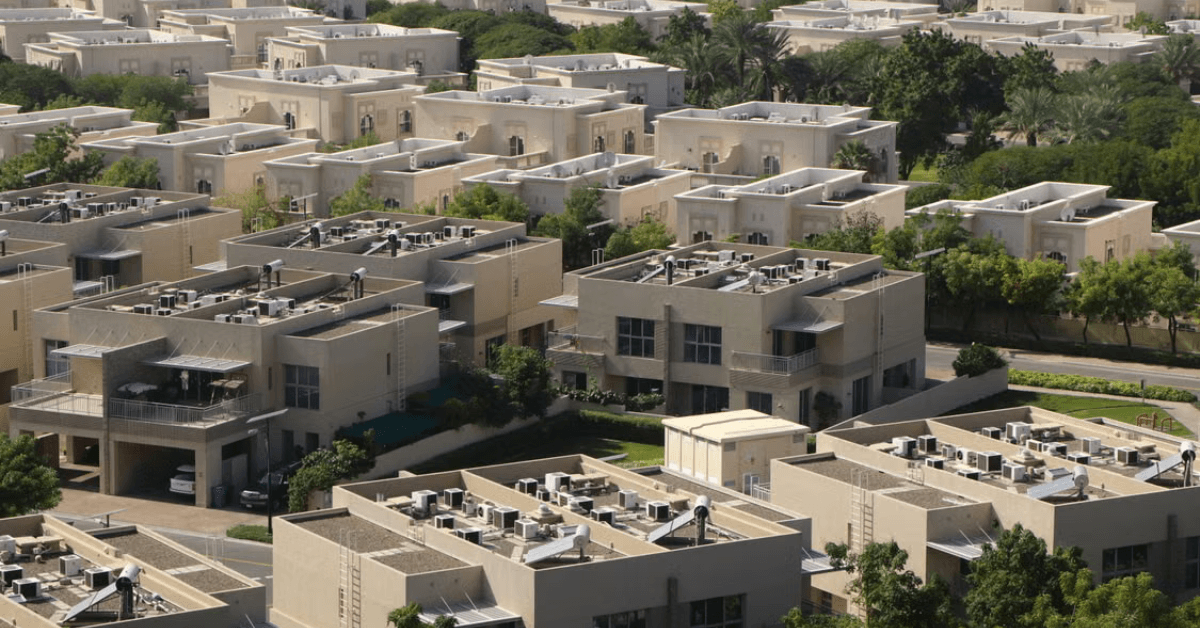
Nakheel planned the community, but dozens of developers built the towers. Build quality and service charges vary widely, so the building matters more than the area average.
- Developer track record: did it deliver on time and to the promised standard? Check in the project status service and in our handover tracker. From abroad, you can also contact the Dubai Land Department's WhatsApp service on 8004488.
- Unit mix: how many identical units compete with yours in the same building?
- Floor plan: is the space usable, or wasted on corridors and awkward corners?
- Natural light and views: these are among the first things tenants look at.
- Size versus price: does the apartment's size match what the target tenant will pay?
- Service charges: ask for current figures and forecasts. High costs reduce net yield.
- Building management: who will manage it, and how does it manage other buildings?
- Useful amenities: a good gym and pool matter more than impressive extras in the brochure.
- The personal test: would you be happy to live there yourself?
For Israelis managing remotely, service charges and management carry extra weight. A well-run building with fair costs reduces vacant periods and maintenance problems, and saves you dealing with issues across time zones and languages.
It is also worth booking a professional snagging inspection before handover. In a community with large quality gaps, it is money well spent.
Between Affordability and Scarcity
A property that is hard to compete with has a natural advantage. But affordability is a significant advantage too.
A rare property that few can afford is different from a quality apartment that thousands can rent. Sometimes the best investment combines:
- A price that appeals to a broad audience.
- Quality that sets the apartment apart from nearby buildings.
- Enough distinctiveness in the building and street that it does not compete with hundreds of identical units.
The same logic applies to other affordable areas with large supply, such as Dubai South.
Capital Growth and Planning Your Exit
No one can guarantee that a particular apartment will rise in value. The short-term picture is moderate: prices fell in Q2, and a lot of supply is still on the way.
Still, it is worth thinking about who will buy from you. If the only possible buyer is an investor looking at yield, the sale depends mainly on the numbers. If an owner-occupier also wants to move in, you gain another source of demand.
In an affordable community, the buyer pool can include both investors and owner-occupiers. The features that attract tenants usually matter to future buyers too. For current prices, see our price index.
Scorecard
The scores match those in our case study and are based on the same data.
| Category | Score out of 10 | Basis for the score |
|---|---|---|
| Location | 6 | Inland, with access to Al Khail Road, Sheikh Mohammed Bin Zayed Road and Hessa Street. No waterfront |
| Developer | 6 | Nakheel master plan, but towers by many developers and of uneven quality |
| Project concept | 6 | Mostly apartments, with an emphasis on practicality rather than distinctiveness |
| Pricing | 8 | About AED 1,510 per sq ft, compared with a city apartment average of 1,969, according to Property Monitor via Engel & Völkers, January to June 2026 |
| Rental potential | 7 | Gross yield of about 6.4% to 8%, depending on the source and district |
| Value appreciation potential | 5 | Strong growth since 2017, but a 3% fall in Q2 2026 and a record supply wave ahead |
| Liquidity | 9 | One of the most actively traded communities in Dubai, with broad resale demand |
Conclusion: a good fit for yield-focused investors who carefully choose ready or near-complete apartments. Less suited to a quick sale of an off-plan property during the 2026 and 2027 supply wave.
So, Should You Avoid the Area?
We would not rule it out because of future supply, but we would not buy any apartment just because it is affordable either.
Oversupply does not cancel the area's strengths, but it exposes the weaknesses of average properties. Price creates the demand; the quality of the building and the apartment decides whether you can capture it.
When people say there is too much supply, ask: relative to what demand? Then comes the practical question: when tenants can choose, will they choose your apartment?
Frequently Asked Questions
Is there oversupply in 2026?
It is one of the areas where handovers are concentrated. Tenants have more choice and competition has increased. Cushman & Wakefield Core sees this as local pressure, while population growth supports demand.
Will rents fall?
In Q2 the city average fell 6%, but the sharpest apartment falls were in premium areas such as Downtown, Dubai Hills and the Marina. Well-chosen apartments are likely to hold up better than average ones.
How much does it cost to rent an apartment?
According to Bayut for H1 2026: about AED 54,000 a year for a studio, about 79,000 for a one-bedroom and about 113,000 for a two-bedroom. These are asking prices, and actual contracts may differ.
What should I check before buying?
Focus on the building: handover history, the number of identical units, the floor plan, natural light, service charges and management quality.
Is it still a good investment for rental income?
There is a broad tenant base thanks to the price and established amenities. However, success depends more on choosing a well-designed, well-managed building. Also test a scenario in which rents fall by 5% to 10%.
Comparing Buildings and Not Sure What Tenants Will Prefer?
Dubai Index can review a specific building with you, including its unit mix, competing towers and handover dates nearby. Leave your details for a free consultation, or talk to us on WhatsApp.