

Buy now or wait?
After five years of almost uninterrupted gains, Dubai's property market was tested this year. The regional conflict reached the UAE, prices fell from their February peak and rents softened in several popular apartment areas. At the same time, the largest wave of handovers in years began to reach the market. That is why buying property in Dubai in 2026 calls for more careful checks than before.
For Israeli investors, who usually buy remotely, these changes matter even more. You cannot walk past the building on your way home or chat with the neighbours. You rely on data and on the professionals you work with. So this guide focuses on numbers you can verify and on practical checks before you pay a deposit.
It can still be a good time to buy, but mistakes now cost more.
Dubai's property market in 2026 at a glance
| Metric | Latest figure | Source |
|---|---|---|
| City-wide residential values | down 4.5% year on year in September 2026 | ValuStrat index |
| Apartment values | down 6.4% year on year in September 2026 | ValuStrat index |
| Villa values | down 3.4% year on year in September 2026 | ValuStrat index |
| Units completed in H1 | approx. 24,800, up almost 38% year on year | Cavendish Maxwell |
| Q3 residential sales | approx. 34,000 transactions, down 38% year on year | Cavendish Maxwell |
| Q3 apartment rents | down 12.8% year on year in Dubai Marina, 12.2% in Business Bay and 10.4% in Jumeirah Village Circle (JVC) | Savills |
| Dubai population | 4,807,185 at the end of September 2026 | Dubai Statistics Center |
The data was checked against the sources on 19 October 2026. The indices update monthly, so check the latest release before you decide.
What changed in 2026?
A hit to buyer confidence
The regional war that began on 28 February 2026 brought missile and drone strikes to the UAE. Flights were disrupted and some buyers put their plans on hold. For a city that marketed itself partly as a safe haven, this was a new kind of risk.
ValuStrat's Q2 review recorded a sharp price fall in March. The monthly decline later eased to about 1% towards mid-year.
Strong sales figures from early 2026 do not prove the market ignored the conflict. Many deals were agreed before it began, so it is more useful to look at the market a few months later. For the full Q3 sales picture, see our article on the Q3 2026 slowdown in property sales.
Prices: a correction, not a crash
In September, the ValuStrat index was 4.5% lower than a year earlier. Apartments fell 6.4% and villas 3.4%. Even so, the monthly decline eased to 0.1%, a possible sign of stabilisation.
These are index figures and do not describe every individual property. The differences between communities matter a great deal. ValuStrat's August breakdown, the latest with community-level data, shows:
- The steepest annual falls for apartments: the Burj Khalifa area, 20.4%; Jumeirah Beach Residence (JBR), 16.9%; Town Square, 9.7%; Palm Jumeirah, 8.6%.
- Apartment areas that kept rising: Dubai Silicon Oasis (DSO), 4.3%; Dubai Sports City, 4.2%; Al Quoz 4, 3.9%.
- Broad stability: 61% of freehold apartment communities and 73% of villa communities held their value in August.
General market growth can no longer be expected to make up for overpaying for an apartment. The specific building and the price you pay matter more.
Rents have softened
Rising rents were one of the main reasons to invest in Dubai. That trend has changed. Cushman & Wakefield Core reported a quarterly fall of about 6% in rents in Q2. Downtown apartments recorded a 14% drop in that quarter alone.
In Q3, Savills data showed annual falls of more than 10% in Dubai Marina, Business Bay and Jumeirah Village Circle. Even so, the quarterly changes were smaller, possibly pointing to the start of stabilisation. For a breakdown by community, see our article on the fall in rents in Q3.
A yield calculated on 2025 rents may look too optimistic. Base it on today's rents.
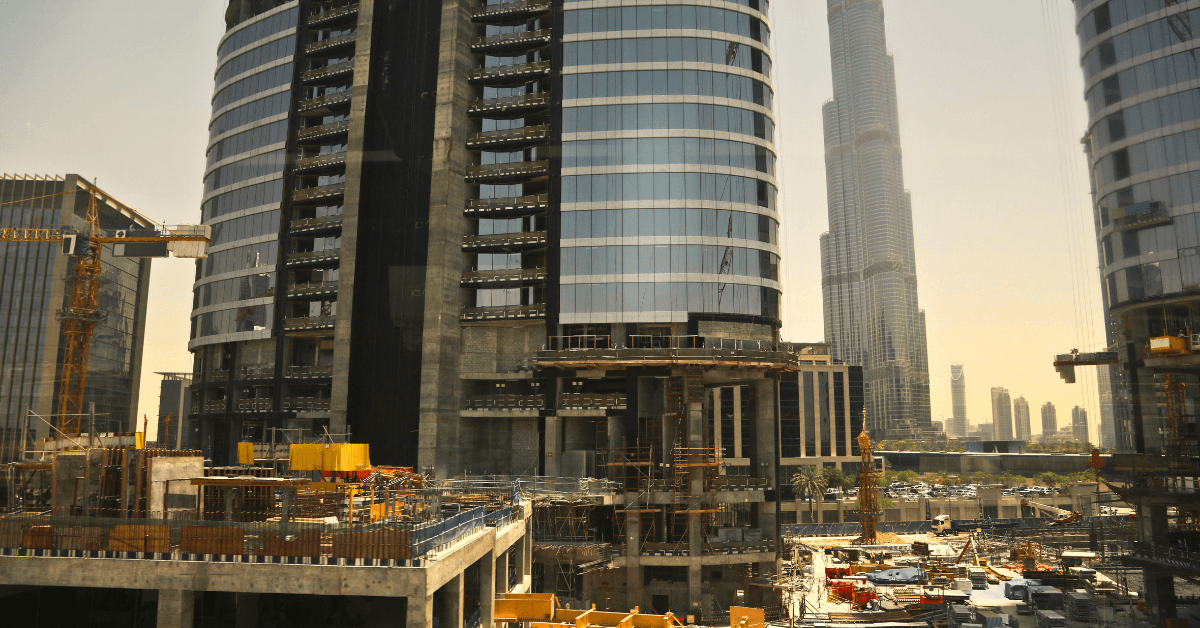
The handover wave is already here
Delays are sometimes presented as protection against oversupply, but Cavendish Maxwell's 2026 data shows the limits of that argument:
- Completions are rising: about 24,800 units in H1, almost 38% more than a year earlier.
- More homes are scheduled: about 47,000 in H2, of which 14,000–23,500 are expected to complete, based on past delivery rates.
- The pipeline continues: 162,500 units scheduled for 2027 and 128,200 for 2028.
- Mostly apartments: more than 82% of H2 deliveries are expected to be apartments. Jumeirah Village Circle, Dubai South, Dubai Science Park, Business Bay, Downtown and Dubai Healthcare City account for almost 37% of scheduled completions.
There is also a positive side: in H1 2026, about 28,000 units were launched across 124 projects, compared with 102,000 units across 410 projects a year earlier. Fewer launches today should ease pressure in later years.
A delay does not make supply disappear
A delayed project arrives later, sometimes alongside the next batch of handovers. That is why the direct competition for your unit matters more than the city-wide figure.
Purely as an example, imagine a 400-unit tower, 150 of them one-bedroom apartments, with three similar towers nearby scheduled for the same year. At handover, hundreds of almost identical apartments could reach the market. Some owners will cut prices because they cannot wait. Even a well-built apartment can end up in a crowded field.
Population growth supports demand, but does not guarantee success
According to official figures, Dubai's population reached 4,807,185 at the end of September 2026, an increase of 226,885 since the start of the year.
That is real demand, but it is not spread evenly across property types. A family looking for three bedrooms does not absorb a surplus of small studios. Many new residents rent or share rather than buy.
Growth supports the market as a whole, but it does not guarantee that every apartment will find a tenant at the rent you assumed. You need to check demand for the specific property.
Who should buy, and who should wait?
2026 can suit investors with a long horizon and stable finances. Prices have come off their peak, and a slower market gives buyers more room to negotiate. On the other hand, rents are softening and supply is growing, so the outcome depends on choosing well and paying the right price.
| You may want to wait if you... | You may want to buy if you... |
|---|---|
| need a quick profit or a quick sale | plan to hold for five years or more |
| would struggle to meet every payment comfortably | can hold on even when the resale market is quiet |
| depend on a specific rent from day one | have found a property priced well against ready alternatives |
| need a payment plan to make the purchase possible at all | want to use the slowdown to negotiate better terms |
A moderate market gives buyers more time and bargaining power. Forecasts of a crash and promises of another boom are not a sufficient basis for a decision.
Seven checks before buying property in Dubai in 2026
Due diligence is an independent review of a property's facts, price and risks before you commit. These are the questions that matter, especially for off-plan purchases:
- Who will live here? Define the tenant or owner-occupier. Can they afford the rent? Will anyone want to buy from you in order to live there?
- What will the unit compete with at handover? Ask for the unit mix and check nearby projects scheduled for the same period.
- How does the price compare with a ready property? Compare the price per sq ft with completed homes nearby. See also our guide to buying off-plan in 2026.
- What rent can you achieve today? Use current data and deduct service charges, management and other costs.
- What is the developer's track record? Check previous projects. For progress on existing projects, use the Dubai Land Department's official service. It is available on the website, in Dubai REST and through the department's WhatsApp on 8004488.
- Can you hold the property? Make sure you can meet every payment and will not be forced to sell at handover if the market is slow.
- Does the deal work without price growth? If the property is worth exactly the same at handover as today, would you still want to own it?
A long payment plan is a financing option. It is not a reason to buy in itself. Dubai Index can provide an additional check on these questions. If the whole case depends on a quick sale at a higher price, be very careful.
Tips for Israelis buying remotely
- Work with licensed professionals. Check the agency and the broker yourself in the Dubai Land Department register. You can start with our list of vetted agencies.
- Pay through official channels. Under Dubai Law No. 8 of 2007, off-plan payments go into the project's registered escrow account, not the developer's general account. Verify the details before you transfer.
- Track construction yourself. Our handover tracker helps you do this from Israel.
- Get everything in writing. Payment plans, handover dates and incentives must appear in the signed contract, not just on WhatsApp.
- Budget for currency and transfers. Converting shekels to dirhams adds a cost to every payment. Our money transfer and currency service explains the options.
Is this the right year to buy?
The risk this year is less about timing and more about buying without enough checks.
Prices have come off their peak, rents in key apartment areas are lower and the handover wave has arrived. At the same time, the population keeps growing, launches have slowed and some communities are still gaining value.
The real question is whether this is the right property, at this price, against this competition, for as long as you will need to hold it. For area-level data, see our case studies on Jumeirah Village Circle, Business Bay, Palm Jumeirah, Dubai Marina and Downtown Dubai.
Frequently asked questions
Are Dubai property prices falling in 2026?
On average, yes. The ValuStrat index was 4.5% lower year on year in September, but the monthly decline eased to 0.1%. There are differences between areas, and in August some apartment communities, such as Silicon Oasis, were still up year on year.
Is there an oversupply of apartments?
Supply is growing. About 24,800 units were completed in H1, and more than 82% of upcoming handovers are apartments. Whether there will be a surplus depends on location and unit type. Check the competing projects nearby.
Are rents falling?
In several popular areas, yes. Savills showed annual falls in Q3 of 12.8% in Dubai Marina, 12.2% in Business Bay and 10.4% in Jumeirah Village Circle. The quarterly change showed early signs of stabilisation.
Is it safe to buy off-plan in 2026?
It can suit long-term investors who can meet every payment and hold the property after handover. Compare with ready properties, and check the developer and construction progress with the official tools.
Is Dubai's population still growing?
Yes. The official figure at the end of September was about 4.81 million residents, almost 227,000 more than at the start of the year.
Considering a purchase in a slower market?
This is a time for thorough comparison. The Dubai Index team can check a specific project against sale prices, rents and supply in its area before you commit.