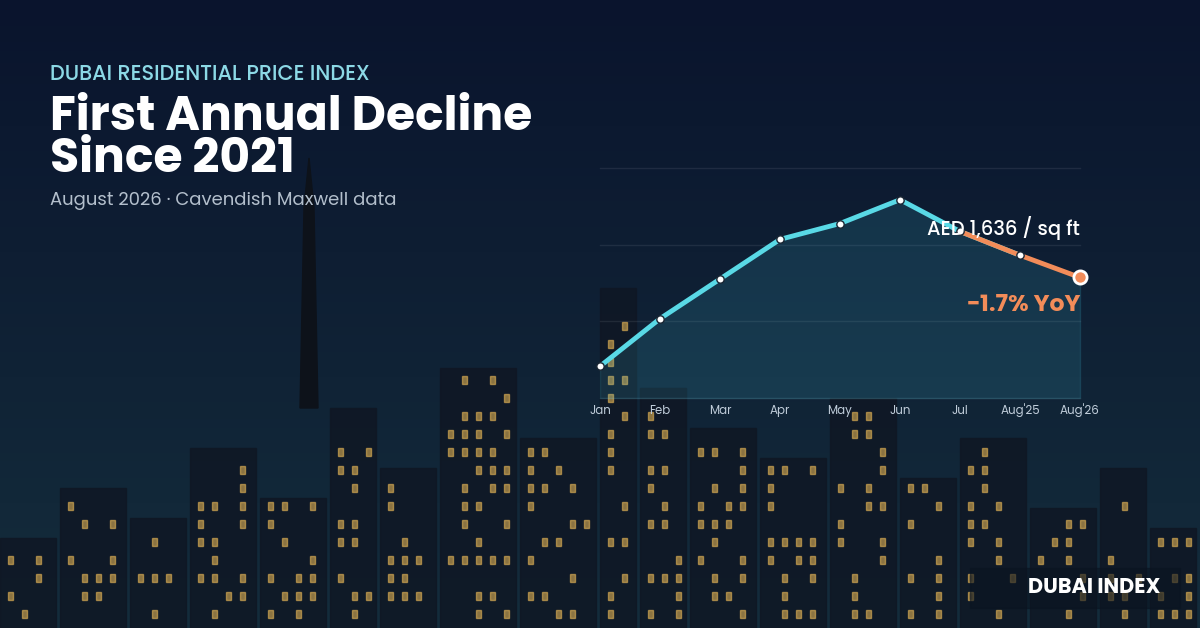


Bayut's new report on the Dubai property market H1 2026 confirms real resilience: villa prices showed stronger momentum than apartments through the first half of the year, and buyer demand on the platform climbed back to roughly 95% of January–February 2026 levels by July, after dropping sharply following regional escalation on March 1.
Dubai Property Market H1 2026: What Slowed It, What Brought It Back
According to Bayut, the year opened at an all-time high, with January and February carrying strong momentum from 2025. That changed on March 1, when regional tensions disrupted buyer activity. Fiba Ahmed, Bayut's Vice President of Property Sales, described the months since as a market that has grown more measured and selective, rather than one that stalled.
The recovery shows up clearly in Bayut's internal platform data. By July, buyer inquiry volume on Bayut had returned to about 95% of pre-conflict (Jan–Feb) levels, and Form F activity — the formal sale agreements signed between agents and buyers — was running at roughly 90% of its pre-conflict daily average for the month. Regional and local traffic now makes up about 81% of Bayut's visitors, alongside a pickup in interest from Germany, Turkey and Saudi Arabia.
Villas Lead, Apartments Hold Steady
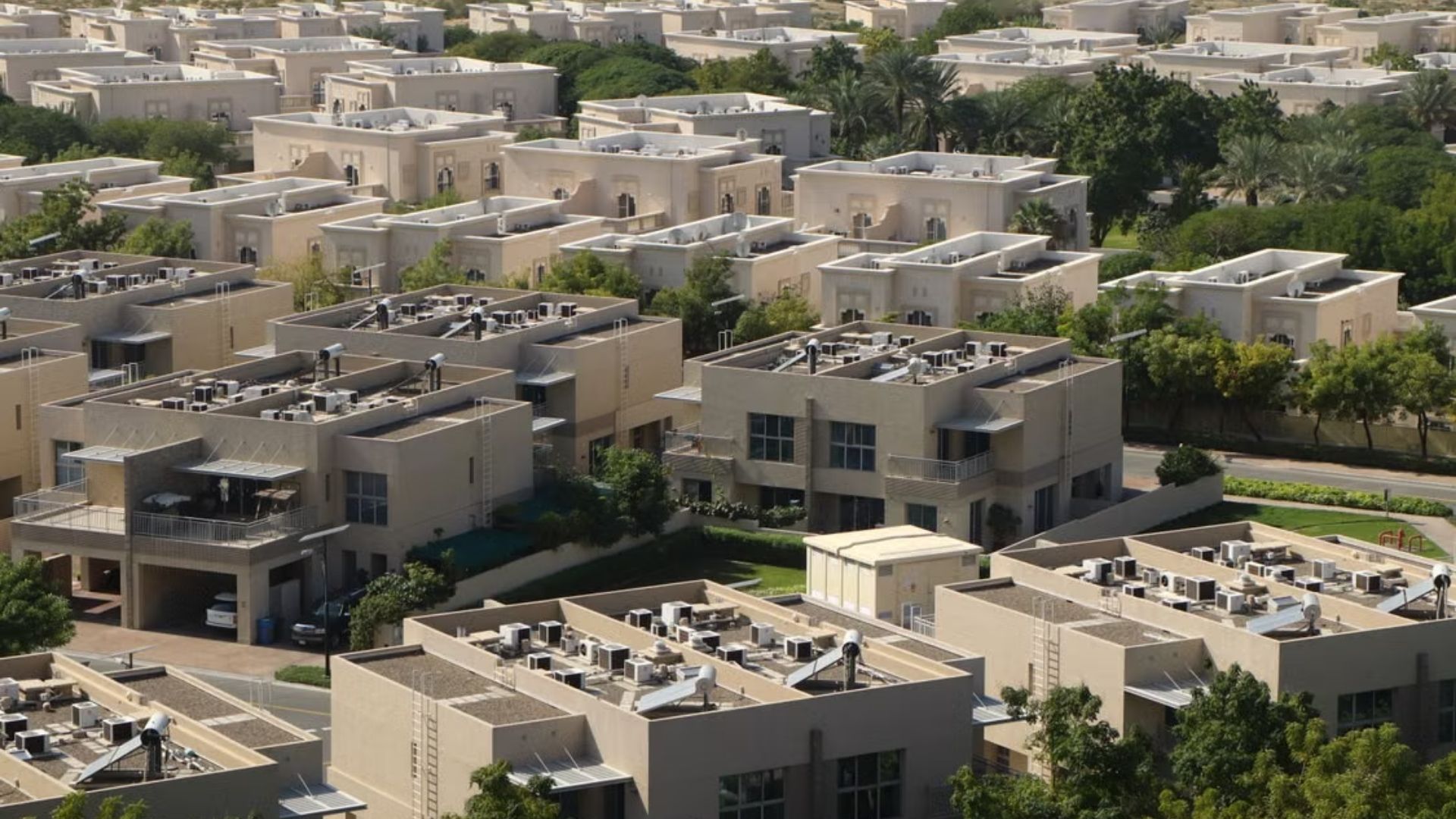
Advertised apartment prices held largely steady across most communities during H1 2026, with Bluewaters Island posting a 1.84% rise in average price per square foot and Dubai South up 3.27%. Villas told a different story: areas like Al Barari, Jumeirah Islands and DAMAC Lagoons saw some of the strongest advertised price growth across the ultra-luxury, luxury and mid-tier villa segments, reflecting continued appetite for lower-supply villa communities even as thousands of new apartment handovers reach the market this year.
On the rental side, waterfront and well-integrated communities continued to command premiums, while newly delivered apartment supply in areas like JVC, Meydan and Business Bay gave tenants more negotiating room. Bayut separately reported Dubai rental yields reaching 9.06% for the period — a figure that continues to support Dubai's case as a yield destination relative to many Western markets.
Ultra-luxury demand held up as well. Bayut's data pointed to sustained interest from both international and regional buyers in the top end of the market, which Ahmed linked to confidence in Dubai's stability through a period of regional uncertainty rather than a slowdown in appetite.
Why This Matters for Israeli Investors
For Israeli buyers weighing timing, the report offers a useful reality check: Dubai's market didn't stay frozen after March, it recalibrated. Demand and transaction activity have largely normalized by mid-year, and villa communities in particular are holding pricing power due to constrained supply — worth watching for anyone eyeing family-sized units in Dubai Hills Estate or similar communities.
At the same time, developers are set to hand over tens of thousands of new apartment units by year-end, which should keep pressure on sellers to price realistically in oversupplied segments — a potential opening for buyers who were priced out during 2024–2025. Anyone tracking specific off-plan launches can compare current pricing against delivery timelines on our off-plan project profiles.
The Bottom Line
Bayut's H1 2026 data suggests a market that absorbed a real shock in March and largely recovered by July, with villas outperforming and ultra-luxury demand intact. It's not the eye-watering growth story of 2023–2024, but a steadier, more selective market — which may suit long-term investors better than short-term flippers.
Source: Bayut's H1 2026 Dubai Sales and Rental Market Report, with additional reporting from Economy Middle East and Entrepreneur ME.
CTA: Curious how these trends affect a specific project or area you're considering? Talk to the Dubai Index team for a personalized read on the numbers.